



Barreletics × Coperni SS26: Runway Grip, Studio Stability
From the Reformer to Paris
On the Coperni SS26 runway in Paris, a shoe made for Pilates walked with one of fashion's most experimental houses.
Look more closely at the two brands, though, and the collaboration begins to make perfect sense.
Coperni was founded in Paris by Sébastien Meyer and Arnaud Vaillant, two designers whose work has long been shaped by an interest in science, technology and the possibilities of materials. Even the name Coperni is a reference to Nicolaus Copernicus, the Renaissance astronomer whose work fundamentally changed the way people understood the world around them.
Meyer and Vaillant have carried that spirit of curiosity into fashion. Rather than using technology simply to make clothes look futuristic, they have repeatedly asked what innovation can actually contribute to the object itself: how something is constructed, what a material can do, how it interacts with the body and, ultimately, whether something genuinely new can still feel natural to wear.
That philosophy has taken Coperni into some unusual territory. The designers have drawn inspiration from scientific research and CERN, explored technical materials and digital culture, and created one of the most memorable runway moments of the last decade when a dress was sprayed directly onto Bella Hadid's body during their Spring/Summer 2023 show.
The spectacle changes from collection to collection, but the curiosity behind it is remarkably consistent.
Take something familiar. Question how it has always been done. Then see if there is another way.
That is also, in a very different corner of design, how Barreletics began.


Two paths to the same question
Barreletics founder Stefanie Miller was not trying to design a fashion shoe. She was looking at a problem inside barre and Pilates studios.
Practitioners were doing increasingly sophisticated work on Reformers, Megaformers and studio floors, yet the primary footwear solution remained essentially a sock with silicone dots added underneath it.
The dots could create traction against a surface, but there was another point of movement they could not eliminate: the foot itself could still move inside the sock.
Barreletics calls this the Double Failure. The foot can move against the fabric while the sock moves against the surface beneath it.
So instead of asking how to put more grip on a sock, Barreletics questioned the sock itself.
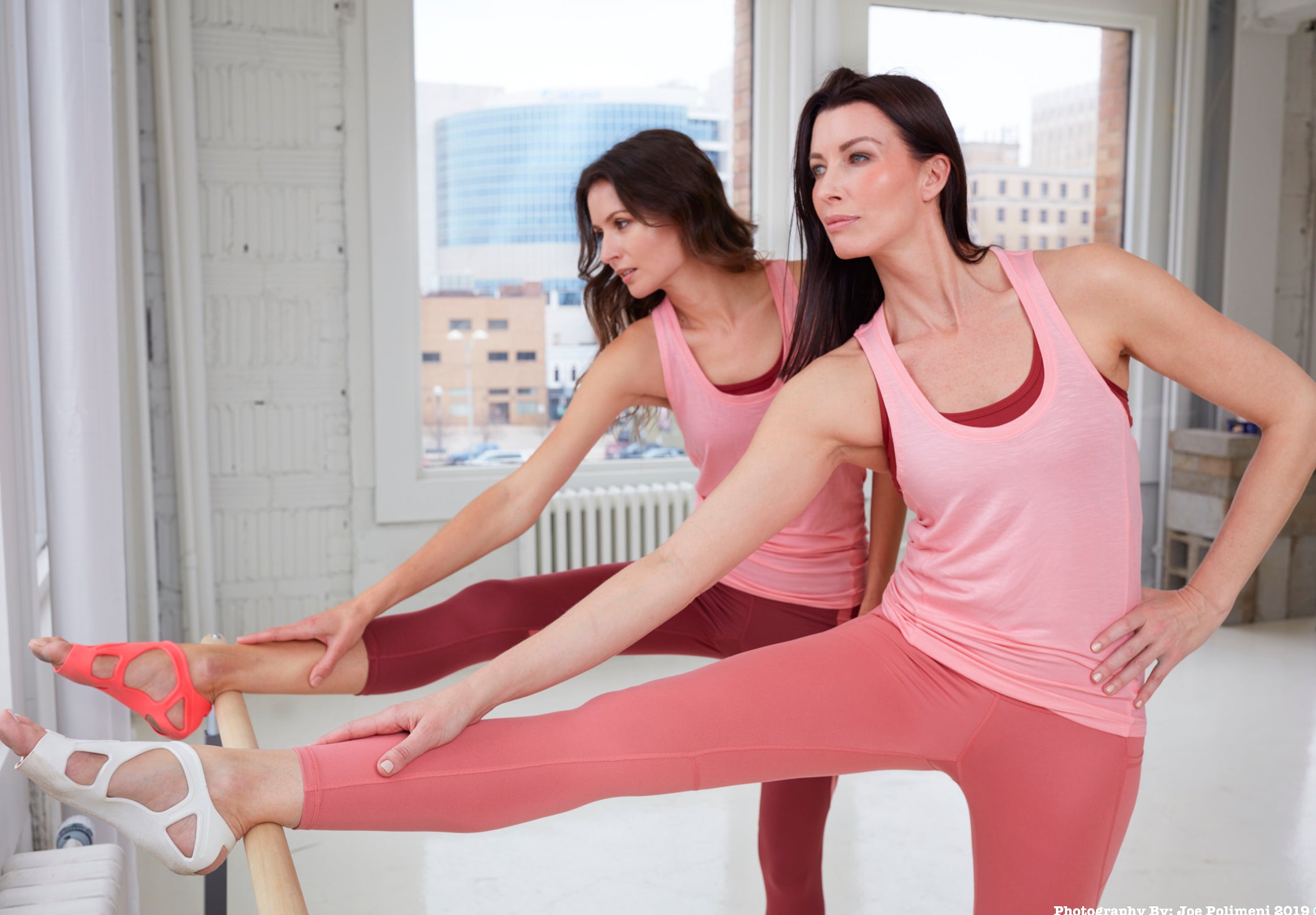
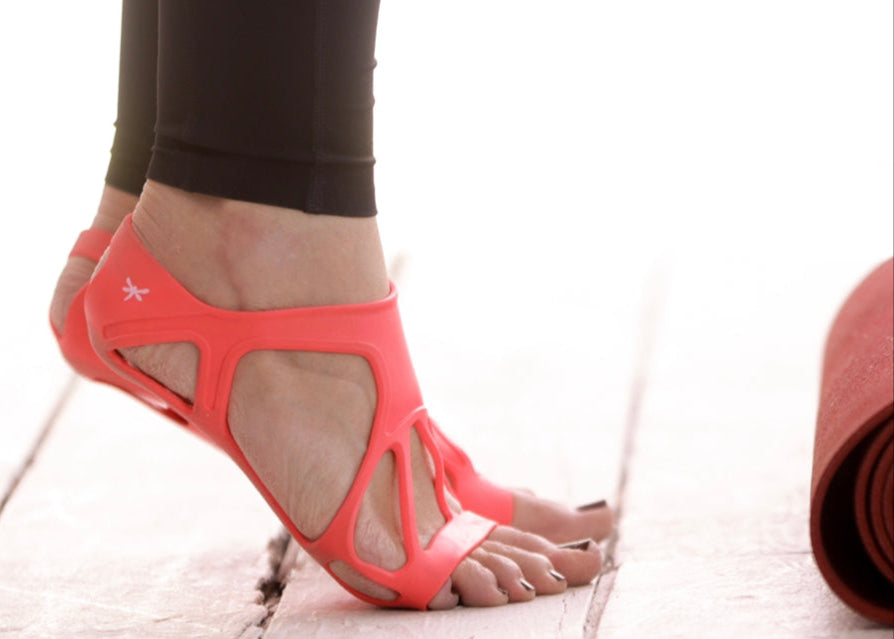
Performance Skin was developed as a purpose-built layer between the foot and the surface. Its 360° grip is engineered directly into the material rather than printed or bonded underneath fabric. The form follows the foot closely, while the toes remain completely free to move and splay naturally.
The intention was to preserve what practitioners value about moving barefoot while creating the secure footing needed for demanding studio movement.
Stable enough to grip. Sensitive enough to feel. Free enough to move.
It is a very different product from anything Coperni had designed, but the thinking behind it has something in common with Meyer and Vaillant's approach: function and material are not details added after the design. They help determine the design itself.
A softer direction for Coperni
That connection became particularly relevant for Spring/Summer 2026.
For the collection, Meyer and Vaillant turned Coperni's longstanding fascination with technology toward the body, wellness and care. After years of exploring innovation through science, digital culture and new materials, the designers were interested in making those ideas feel more human.
The collection explored what Coperni described as “carewear”: clothing considered not only in terms of appearance, but through the relationship between what we wear and how the body feels.
Within that world, movement became part of the design conversation.
And that is where Barreletics entered the picture.
The limited Barreletics × Coperni Closed Sole appeared in the collection, grounding selected runway looks with an open-toe, close-to-the-foot silhouette that was unlike conventional fashion footwear but equally unlike the traditional Pilates sock.
Vogue noticed the connection, reporting on the Barreletics Pilates footwear within Coperni's broader exploration of clothing and care. WWD highlighted the wellness influence running through the collection, while Numéro focused specifically on the unusual open, gripping footwear and its combination of freedom, comfort and performance.
For Barreletics, what mattered was that the shoe did not need to be transformed to belong on the runway.
The same decisions that had been made for performance became part of its visual identity.
Function creates the form
The collaborative Closed Sole kept the architecture of Performance Skin intact.
The bottom of the foot remained covered for grip, stability and underfoot protection, while the toes stayed completely free. The lightweight material continued to flex with the foot, and the 360° grip remained built into the product itself.
Nothing needed to be disguised.


On the runway, the exposed toes, sculpted profile and almost second-skin appearance became part of the silhouette. What had been engineered to give a practitioner greater connection to a Reformer or studio floor suddenly read differently in the context of a Coperni collection.
That is perhaps the most interesting part of the collaboration.
Coperni did not take a conventional Pilates sock and make it fashionable. Barreletics had already reconsidered the object entirely.
And Meyer and Vaillant have built much of their career around being interested in exactly that kind of reconsideration.
The Pilates sock era is over.
For Barreletics, that has never simply meant that one product is better looking than another. It describes the shift that led to Performance Skin in the first place.
Instead of beginning with a sock and asking how much grip could be added to it, Barreletics began with the foot and asked what it needed to perform: secure footing, stability, balance, natural toe freedom and connection to the surface.
That thinking ultimately created a product distinctive enough to travel far beyond the environment for which it was originally designed.
For Coperni, a fashion house built by two designers fascinated by what happens when technology, material and the human body meet, that difference became part of the attraction.
Two brands arrived in Paris from very different places.
One began by questioning what fashion could become.
The other began by questioning why Pilates was still being performed in socks.
On October 6, 2025, those two ideas met on the same runway.
The limited Barreletics × Coperni Closed Sole is the piece that walked Paris.