

Why Grip Socks Fall Short: What Barre & Pilates Practitioners Wear Instead
If you practice barre or Pilates regularly, you already know how important your footing becomes once the movement gets difficult.
A deep relevé at the barre, a long standing balance sequence, a Reformer bridge or a Megaformer hold asks for control from the entire body, including the point where your foot meets the surface.
For years, the standard studio solution has been the grip sock: fabric on the foot, silicone dots underneath it.
For Barreletics founder Stefanie Miller, the problem became impossible to ignore through her own barre practice. Grip socks could add traction beneath the foot, but the fabric could still shift around it. She found herself questioning something the studio fitness world had largely accepted: if barre and Pilates had become this sophisticated, why was the primary footwear solution still a sock with dots underneath it?
That question eventually became Performance Skin.
Barreletics didn’t begin by asking how to make a better grip sock. It began by asking what the foot actually needed to perform.
The problem with grip socks
A grip sock has two separate relationships to manage. The silicone underneath needs to grip the surface. At the same time, the fabric surrounding the foot needs to remain stable against the skin.
That creates two potential points of movement: the sock against the surface and the foot inside the sock. Barreletics calls this the Double Failure.
It helps explain something many regular barre and Pilates practitioners already recognize. A sock can have plenty of grip underneath it and still shift, stretch, bunch or require adjustment during movement.
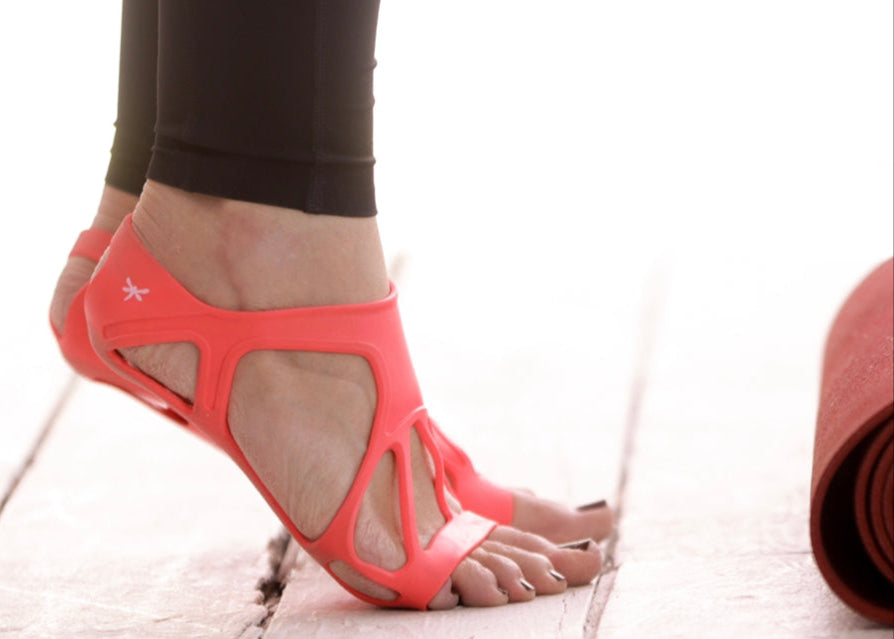
Performance Skin was created by approaching that relationship differently. Instead of applying grip underneath fabric, Barreletics engineered 360° grip into the material surrounding the foot.
Four ways grip socks fall short
1. Applied grip wears differently than the sock itself
Traditional grip socks rely on rubberized or silicone traction applied to fabric. With repeated wear and washing, practitioners may notice that those grip elements flatten, crack or become less effective over time. How quickly that happens varies considerably by brand, frequency of use, washing, surfaces and movement.
For someone practicing several times each week, replacing worn grip socks can become a recurring expense.
Performance Skin takes grip out of the applied-dot system entirely. Its traction is engineered into the product itself.
Never loses shape. Never loses grip.
2. Fabric can move around the foot
Grip underneath a sock does not necessarily prevent movement inside it. During dynamic studio work, fabric can stretch or shift as the foot pushes, rotates or changes position through a relevé or a transition at the barre. Anyone who has stopped during class to straighten a heel or pull fabric back into place knows how distracting that can be.
Barreletics was designed to fit close to the foot like a second skin, eliminating the loose fabric structure of a traditional sock.
The goal is simple: spend less time thinking about your footwear and more time thinking about the movement.
3. More material can mean less direct surface feedback
The feet constantly provide sensory information about pressure, position and the surface beneath them. That sensory awareness is part of proprioception, the body’s ability to understand its position and movement.
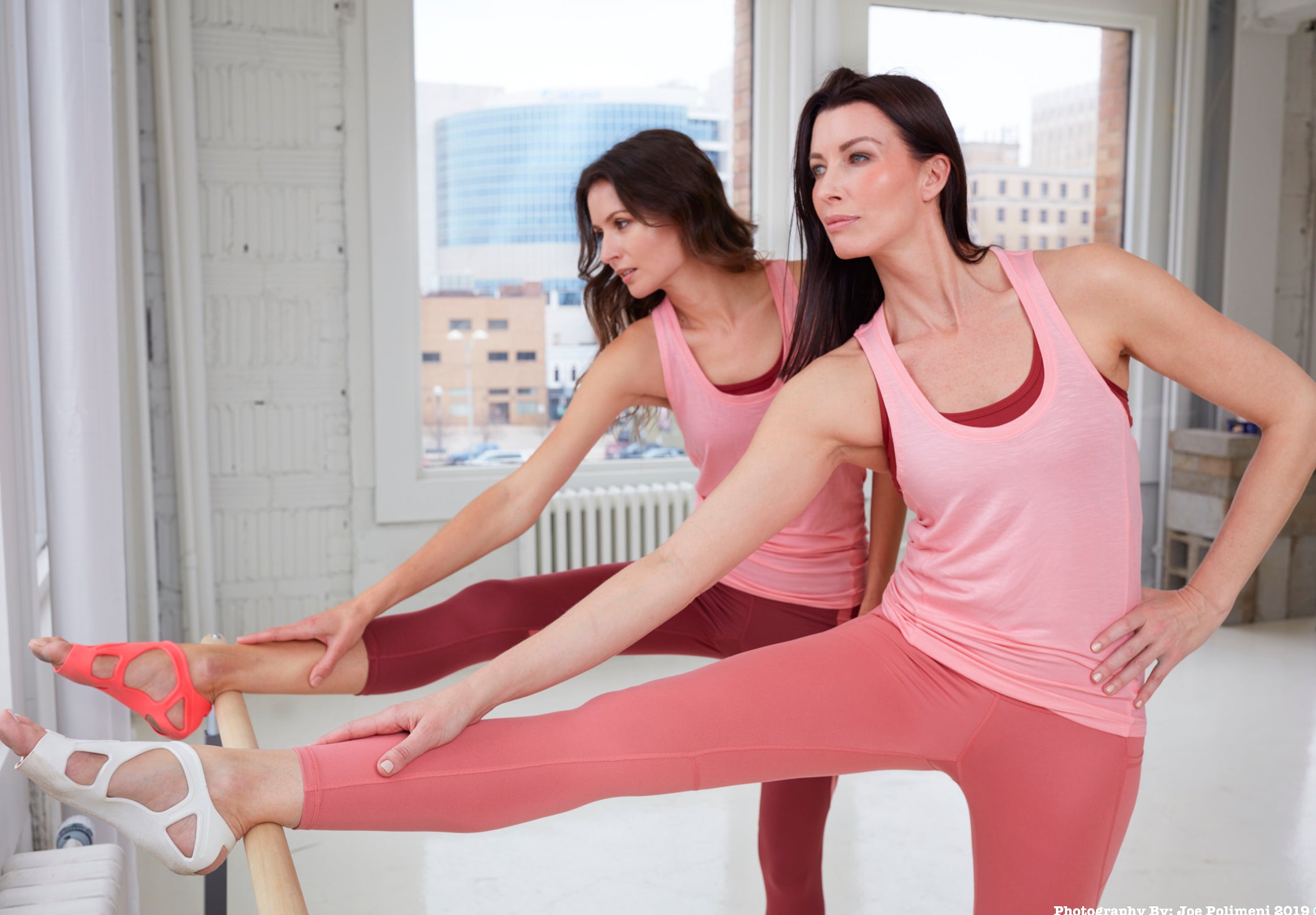
Barreletics wanted to preserve as much of that natural connection as possible while adding secure traction. Performance Skin stays lightweight and close to the foot, and both styles leave the toes completely free to move and splay naturally.
Open Sole takes that idea even further, leaving the heel and toes exposed for the most minimal, barefoot-like experience.
4. Replacing grip socks adds up
Grip socks are relatively inexpensive individually. The calculation changes when someone practices several times a week, owns multiple pairs and replaces them as the fabric or applied grip wears.
Performance Skin was designed as a reusable piece of performance equipment rather than a disposable studio accessory.
Barreletics has seen practitioners use individual pairs for years, including customers reporting hundreds of classes on a single pair. One individual pair reached roughly 1,000 studio classes.
Those are real-world examples, not promised lifespans. Wear varies according to frequency, intensity, surfaces, care and use.
But the philosophy is straightforward. If someone is building a long-term practice, the product supporting that practice should be designed for repeated use.

What Barreletics made instead
Stefanie Miller created Barreletics after experiencing the same frustration in her own barre practice. She wasn’t looking for a more fashionable grip sock. She wanted better footing.
That distinction shaped Performance Skin from the beginning. Rather than fabric with traction added underneath it, Performance Skin uses a lightweight, flexible material with grip surrounding the foot. Dedicated left and right forms follow the foot more closely, while the toes remain completely free.
The result is footwear specifically designed for barre, Pilates, Reformer, Megaformer, Lagree and yoga.
Stable enough to grip. Sensitive enough to feel. Free enough to move.


Open Sole or Closed Sole?
Both Barreletics styles are built around the same performance idea and provide the same 360° grip. The difference is coverage and feel.
Open Sole
Open Sole is the most minimal version of Performance Skin. It leaves the heel and toes exposed, creating a more barefoot-like feeling with maximum breathability and natural toe freedom.
It is designed for practitioners who want as little between the foot and the surface as possible.
Closed Sole
Closed Sole covers the bottom of the foot while keeping the toes completely free. It provides the same grip and stability with additional underfoot protection.
Choosing between them is largely personal preference. The performance system remains the same.
Grip is only the beginning
The biggest difference between Performance Skin and a grip sock is not simply how much traction exists underneath the foot. It is how the entire product interacts with the foot.
Performance Skin was engineered around:
360° grip that surrounds the foot rather than sitting in individual dots underneath fabric.
A second-skin fit designed to move with the foot without loose sock fabric bunching around it.
Natural toe freedom so the toes can move and splay rather than being compressed together inside fabric.
Surface connection created by keeping the product lightweight, flexible and close to the foot.
Rinse-and-reuse care rather than traditional fabric laundering.
Made in the USA, with Performance Skin designed and manufactured in Michigan.
No latex. No silicone. One pair. No more socks.

What practitioners notice
The most useful explanation often comes from the people actually wearing Performance Skin. Barreletics customers have described feeling more stable and secure during Pilates and Lagree, having greater confidence in their foot placement and experiencing less slipping than they did in traditional grip socks.
Others specifically mention Reformer bridges, side planks, feet-in-straps work and advanced Cadillac movements where secure footing becomes especially noticeable. In barre, the same is true of deep holds, standing balance work, planks and transitions at the barre, where the foot is working continuously.
These are individual practitioner experiences rather than guaranteed outcomes, but the pattern helps explain why Barreletics approaches grip differently.
When footing feels secure, the footwear becomes something the practitioner can think about less. And the movement becomes something they can think about more.
“Loving these "shoes". I felt very unstable on the reformer with the grippy socks because they do not grip well on the heel and my feet can move around in the socks but this does not happen with these and I am so confident during the classes now. Love these.”
Dianne P. · Verified Buyer
Frequently Asked Questions
Are Barreletics allowed in studios?
Studio footwear policies vary. Many practitioners use Barreletics in barre, Pilates, Reformer and Lagree studios, but individual studios may establish their own footwear requirements.
If a particular studio requires socks or covered toes, check directly with that studio. A thin sock can also be worn underneath Performance Skin when desired.
What is the difference between Open Sole and Closed Sole?
Both use the same 360° grip concept. Open Sole provides the most minimal, barefoot-like feel, leaving the heel and toes exposed.
Closed Sole covers the bottom of the foot for additional underfoot protection while still leaving the toes completely free. Both are designed for barre, Pilates, Reformer, Megaformer, Lagree and yoga.
How long do Performance Skins last?
Wear depends on frequency, intensity, surfaces, care and individual use. Barreletics has customers who have used individual pairs for hundreds of studio classes and, in exceptional cases, considerably longer.
These experiences demonstrate the product’s potential durability but should not be presented as a guaranteed lifespan.
How do you clean Barreletics?
Hand wash with warm soapy water, rinse and allow to dry. Follow the current Barreletics care instructions.
Do I still need grip socks with Barreletics?
No sock is required to create Performance Skin’s grip. The grip comes from Performance Skin itself.
Some practitioners may choose to wear a thin sock underneath for personal preference or because of a particular studio’s policy.

The Pilates sock era is over
Grip socks became a familiar answer to the need for traction in barre and Pilates. Barreletics began by questioning whether they needed to remain the only answer.
Instead of adding grip to fabric, Performance Skin was engineered around the relationship between the foot and the surface: 360° traction, a close second-skin fit, natural toe freedom and the ability to rinse and reuse the product after class.
For practitioners who invest time, discipline and effort into building strength, balance, mobility and control, footing is part of that investment. The product underneath the foot should support the work being done above it.
The Pilates sock era is over.
Explore Barreletics Performance Skin in Open Sole and Closed Sole, or compare both styles to find the right fit for your practice.
Secure in every hold. No slipping. No resets.