




Barreletics in INTERNI: Where Performance, Design and Fashion Meet
Press
From Italian Design to Performance Skin
INTERNI was born in Milan in 1954, at an extraordinary moment in the history of Italian design.
In the decades that followed, Italian architects, designers and manufacturers would fundamentally change the way the world thought about furniture, interiors and everyday objects. Design was becoming more than decoration. Materials, manufacturing, engineering and the way people actually used an object became part of the creative process itself.

INTERNI grew alongside that transformation.
The magazine describes its original purpose as telling and interpreting the culture of design, following it as its influence expanded from the home into work, hospitality, mobility, commerce, education and everyday life.
Then Gilda Bojardi helped take that idea far beyond the pages of a magazine.
Bojardi became editor-in-chief of INTERNI in 1994, but her influence on Milan’s design culture had already become visible several years earlier. In 1990, when a change in the Salone del Mobile calendar left an unusual opening in Milan’s design schedule, she organized the first Milano Designer’s Week, connecting more than 100 galleries, showrooms and design spaces across the city.
That initiative and the guide INTERNI created around it became an important foundation for what developed into FuoriSalone, the citywide network of exhibitions, installations, showrooms and events now inseparable from Milan Design Week.
It is an unusually fitting history for a publication that would eventually take notice of Barreletics.
Because Barreletics also began by looking at something familiar and asking whether its existing form still made sense.

A design problem hiding inside a Pilates studio
For founder Stefanie Miller, the question emerged through barre.
The movements demanded stability, balance and control, yet the primary footwear solution was still a sock with silicone dots attached underneath it.
There was nothing particularly unusual about that. Grip socks had become so established in barre and Pilates that the category itself was rarely questioned.
Miller questioned it.
The dots could create traction against a surface, but the foot could still move inside the fabric. At the same time, the sock itself could move against the surface beneath it.
Barreletics calls this the Double Failure.
Once the problem was understood that way, designing a better arrangement of silicone dots was not enough. Miller began asking a more fundamental question: what would studio footwear look like if it were designed around what the foot actually needed to perform?
That shift in thinking eventually led to Performance Skin.
The solution changed the form
Performance Skin does not begin with fabric.
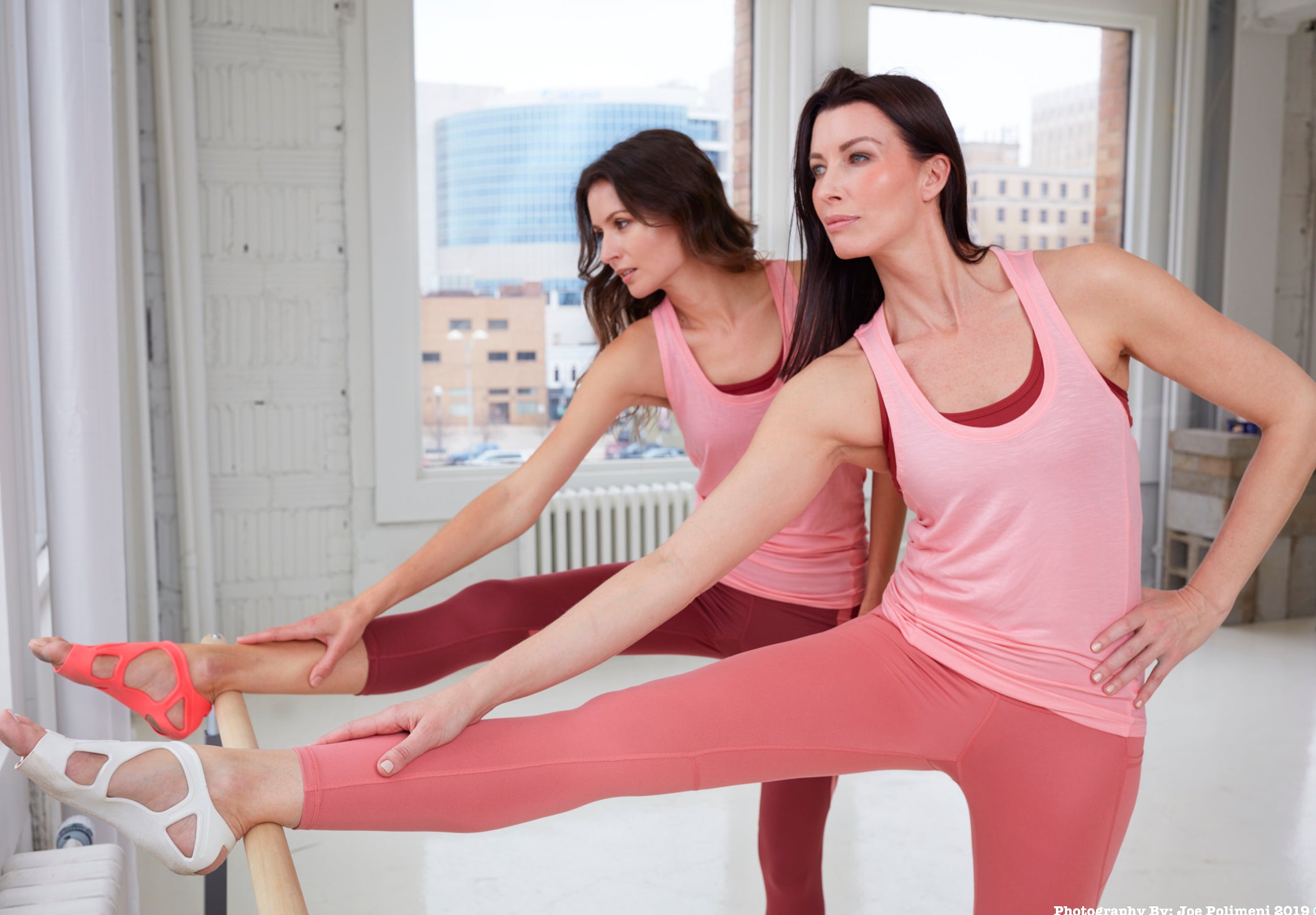
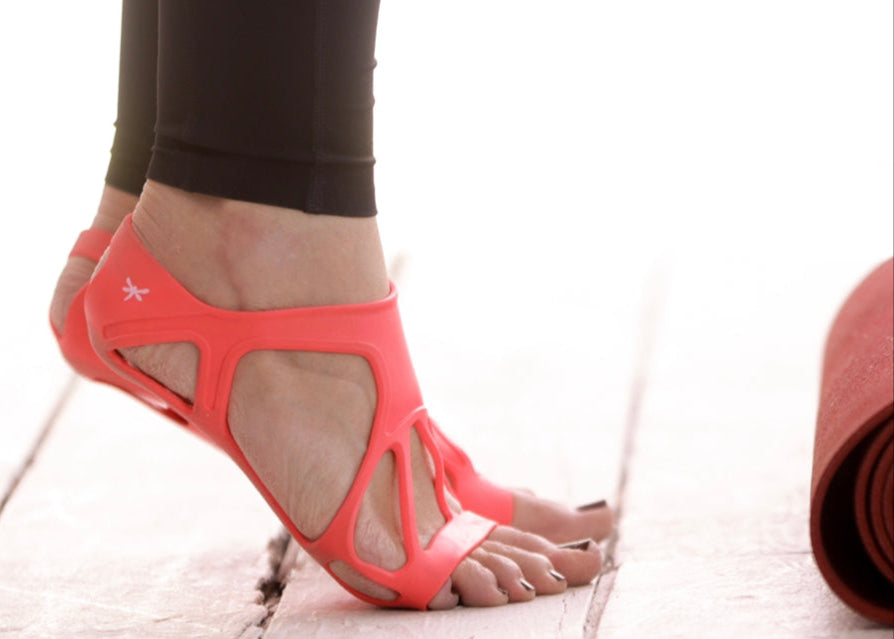
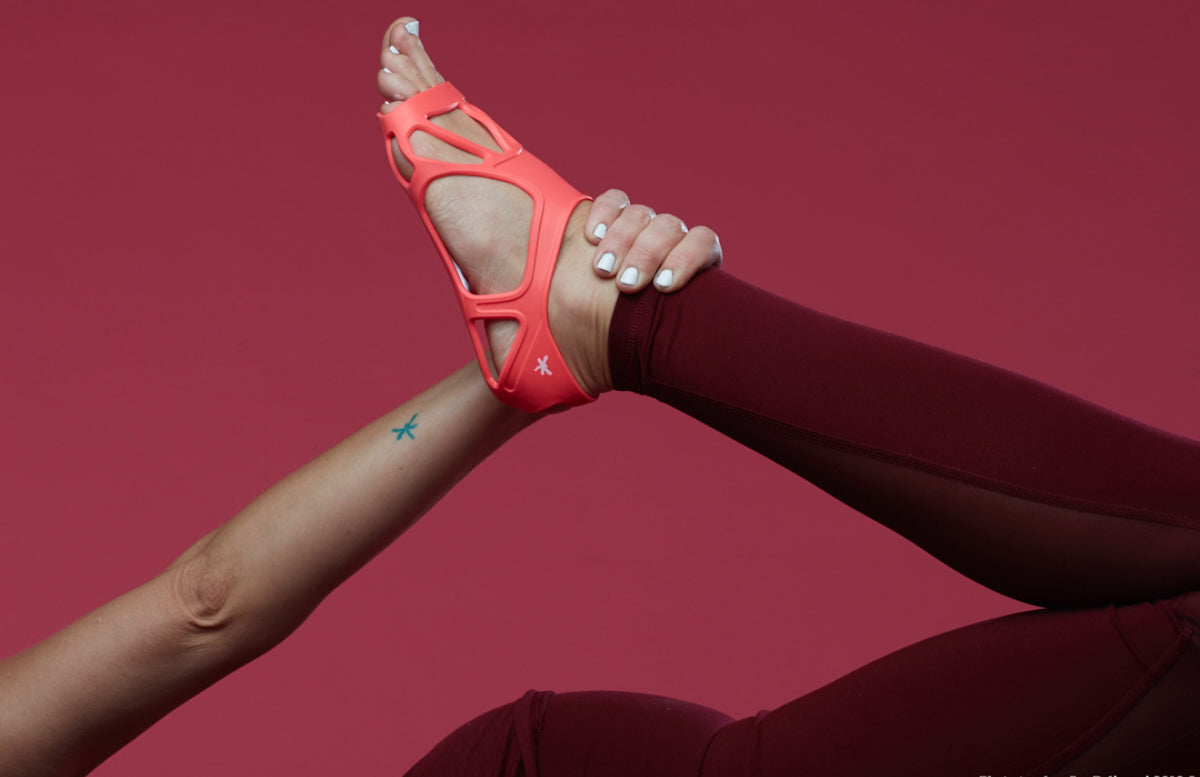
Its 360° grip is engineered directly into the material, creating traction around the foot rather than concentrating it into dots underneath it. Dedicated left and right forms follow the anatomy of the foot, and the toes remain completely free to move and splay naturally.
The resulting shape is unusual, but it was not created simply to look unusual.
Its appearance follows its purpose.
That idea has deep roots in the design culture INTERNI has documented for more than 70 years. Materials and manufacturing are not simply the means by which a finished idea is produced. They can become part of the idea itself.
Performance Skin works the same way.
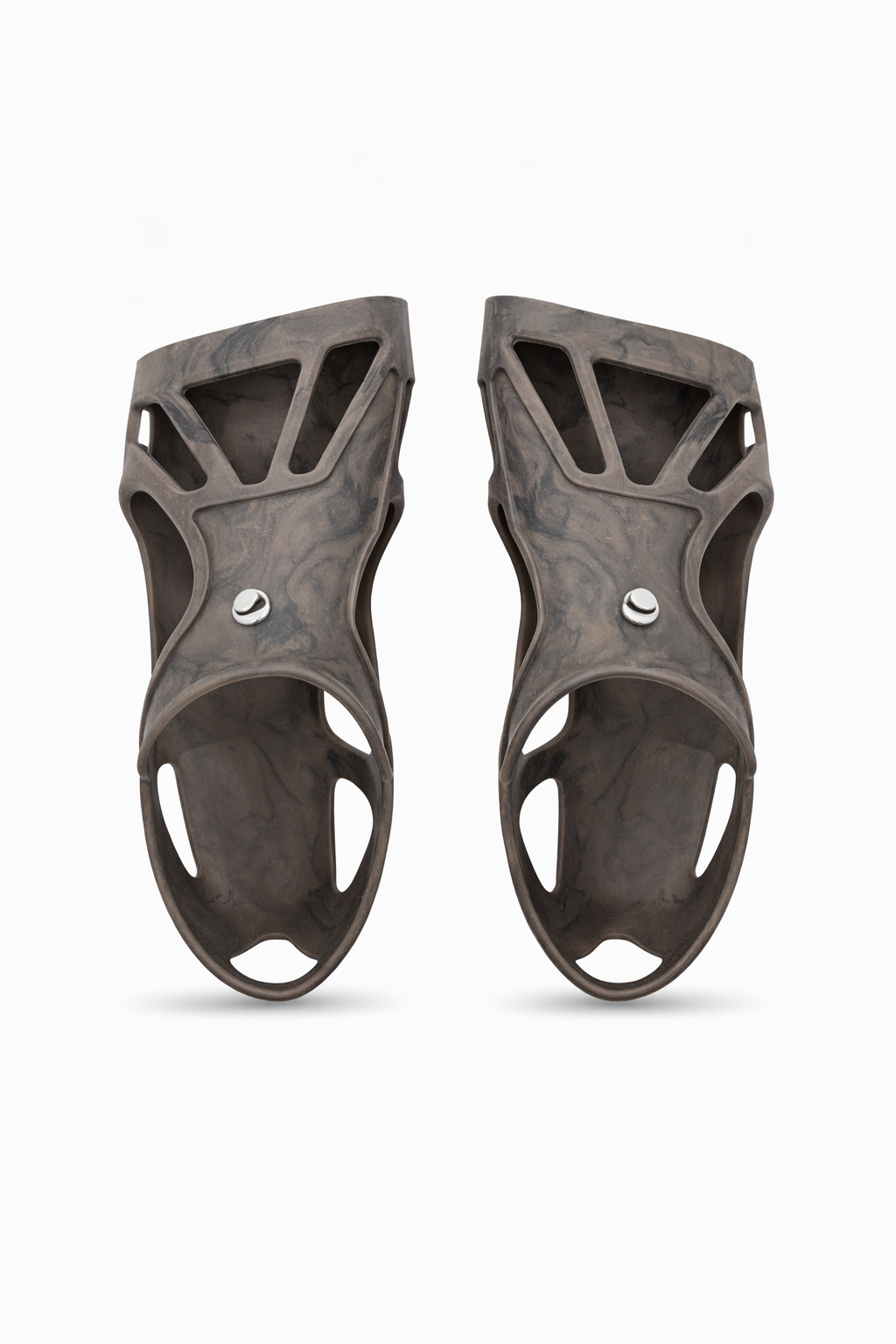
Its flexibility, grip and close-to-the-foot form are connected to the material and manufacturing process. There is no conventional shoe structure surrounding the foot and no fabric layer requiring silicone traction underneath it.
The product is intentionally minimal because Barreletics wanted as little unnecessary interference as possible between the practitioner and the surface.
Open Sole leaves the heel and toes free for the most barefoot-like experience. Closed Sole covers the bottom of the foot for additional protection while keeping the toes completely open.
In both, the objective remains the same.
Stable enough to grip. Sensitive enough to feel. Free enough to move.

The object only matters because of the person using it
One of the ideas running through the history of modern design is that an object cannot really be understood without considering the person who uses it.
That is particularly true of Performance Skin.
Barre and Pilates demand a remarkable amount of control from the body. A foot may be pushing against a Reformer platform, stabilizing through a deep hold or changing direction while the rest of the body remains under tension.
Performance Skin exists at that point of contact.
Practitioners have described feeling more confident and secure when their footing feels stable because they can focus more completely on the movement rather than managing slipping or adjusting their feet.
For people who build a practice over years, that relationship becomes even more relevant. They are investing in strength, mobility, balance and control because they want to continue moving well over time.
Barreletics believes the equipment they wear should support the work they are putting into that practice.
That is a performance idea, but it is also fundamentally a design idea: understand the person, understand the problem and remove what does not need to be there.
From Michigan to Milan
There is an unexpected symmetry in a product designed and manufactured in Michigan finding its way into INTERNI.
For more than 70 years, the magazine has documented what happens when designers, manufacturers, materials and ideas come together to reconsider the objects around us. Under Gilda Bojardi, it expanded that conversation beyond the magazine itself, bringing designers, companies and audiences together throughout Milan and eventually around the world.
Barreletics comes from a completely different environment, but the underlying instinct is familiar.
Something ordinary had been accepted for years.
Miller looked at it and asked why.
Why should increasingly sophisticated barre and Pilates practices still depend on a sock for traction?
The answer was not to decorate the existing solution differently or add more grip to it.
It was to reconsider the object from the foot outward.
That question became Performance Skin.
And that is what makes INTERNI’s recognition particularly meaningful to Barreletics. A product born from a problem inside a Michigan barre studio entered a much larger conversation about materials, manufacturing, function and design.
Not because Barreletics set out to make a design object.
Because solving the performance problem created one.